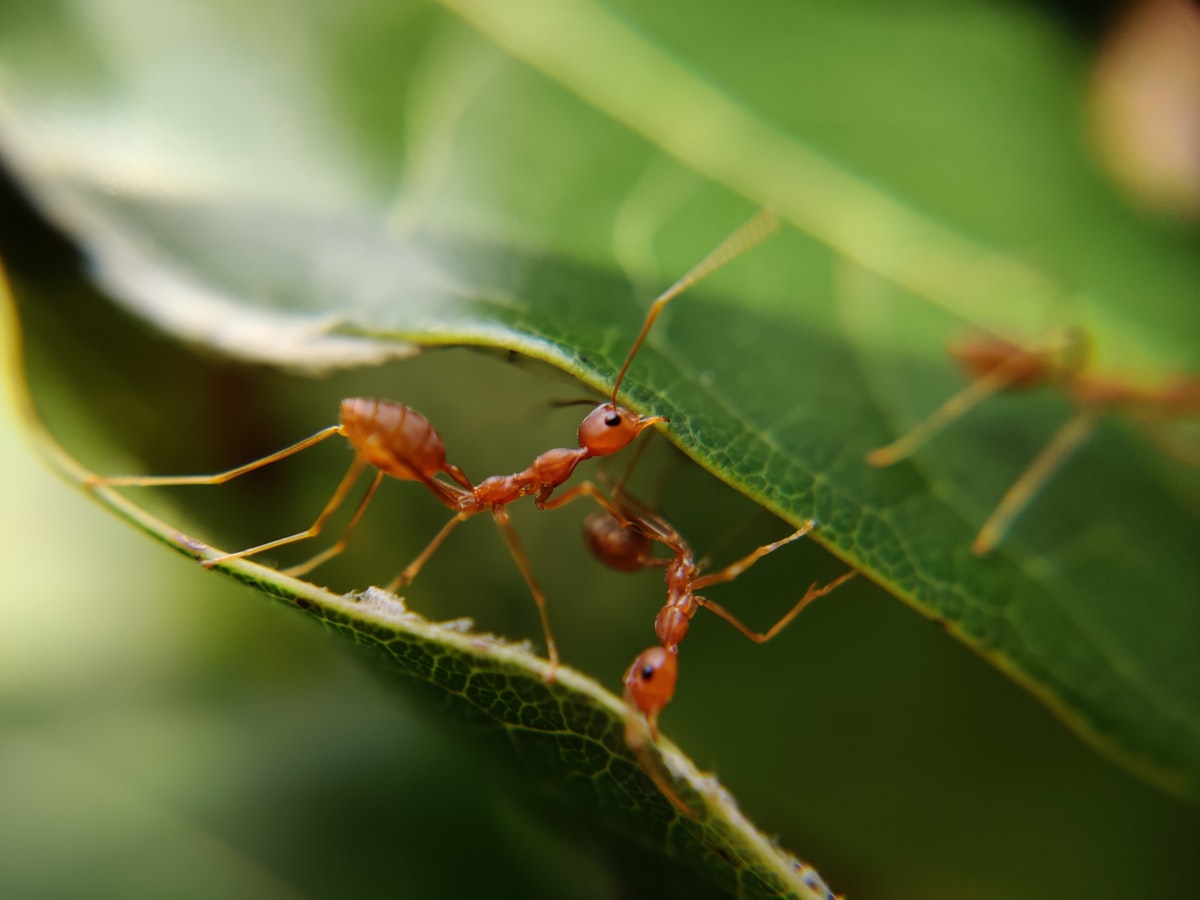
Learn to identify the most common ant species in Wisconsin homes — pavement ants, carpenter ants, odorous house ants, and more — and when to call a professional.
<h2>Why Ant Identification Matters</h2>
<p>Not all ants are the same. Different species require completely different treatment approaches. What works for pavement ants won't work for carpenter ants — and using the wrong approach can actually make the problem worse by splitting colonies.</p>
<h2>Pavement Ants</h2>
<p>The most common household ant in Wisconsin. Small (about 1/8 inch), dark brown to black, with parallel lines on their head and thorax. They nest under sidewalks, driveways, and foundation slabs — hence the name.</p>
<p><strong>Signs:</strong> Small mounds of soil in pavement cracks, trails along baseboards and countertops, especially near food sources.</p>
<p><strong>Treatment:</strong> Gel baits carried back to the colony, perimeter spray treatments, and crack/crevice sealing to block entry points.</p>
<h2>Carpenter Ants</h2>
<p>The most destructive ant in Wisconsin. Larger (1/4 to 1/2 inch), black or black-and-red. They don't eat wood — they excavate it to build nests, which can cause significant structural damage over time.</p>
<p><strong>Signs:</strong> Sawdust-like frass near baseboards or window sills, rustling sounds in walls, large black ants indoors (especially at night).</p>
<p><strong>Treatment:</strong> This is NOT a DIY job. We locate the main colony and satellite nests, apply targeted treatments directly into galleries, and address moisture issues that attracted them.</p>
<h2>Odorous House Ants</h2>
<p>Small (1/8 inch), dark brown to black. When crushed, they emit a distinct rotten coconut smell — hence the name. They're attracted to sweets and form massive trails to food sources.</p>
<p><strong>Signs:</strong> Long trails of ants along baseboards, countertops, and window sills, especially near sugary foods. The coconut smell when crushed.</p>
<p><strong>Treatment:</strong> Sweet gel baits are highly effective. Perimeter treatments and exclusion work prevent re-entry. Colonies can have multiple queens, so thorough treatment is essential.</p>
<h2>Pharaoh Ants</h2>
<p>Very small (1/16 inch), yellowish to light brown. They're a major problem in multi-family buildings and commercial spaces. They spread disease organisms and are notoriously difficult to control.</p>
<p><strong>Signs:</strong> Tiny yellowish ants in kitchens, bathrooms, and near water sources. Trails along baseboards and in wall voids.</p>
<p><strong>Warning:</strong> NEVER spray for Pharaoh ants. Spraying causes them to split into multiple colonies, making the infestation worse. Baiting is the only effective approach.</p>
<h2>When to Call a Professional</h2>
<p>Over-the-counter ant sprays kill foraging workers but rarely reach the colony. If you're seeing ants repeatedly after DIY treatment, the colony is still active and growing. A professional can identify the species, locate the colony, and apply the right treatment the first time — saving you time, frustration, and ongoing contamination of your food and surfaces.</p>
<p><strong>Call us at 920-505-0962 for a free inspection.</strong> We'll identify the ant species, locate the colony, and build a treatment plan that eliminates the problem at the source.</p>
antspavement antscarpenter antsidentificationwisconsin
Related Services & Resources
Ready to Get Rid of Your Pest Problem?
Get a free quote from Mid State Pest Control — serving Northeast Wisconsin.