Bald-faced Hornets
in Wisconsin
Black-and-white "hornets" that build large, gray, football-shaped paper nests in trees and on buildings. Despite the name, they are a type of aerial yellow jacket — and they are one of the most aggressive stinging insects in Wisconsin when their nest is threatened.
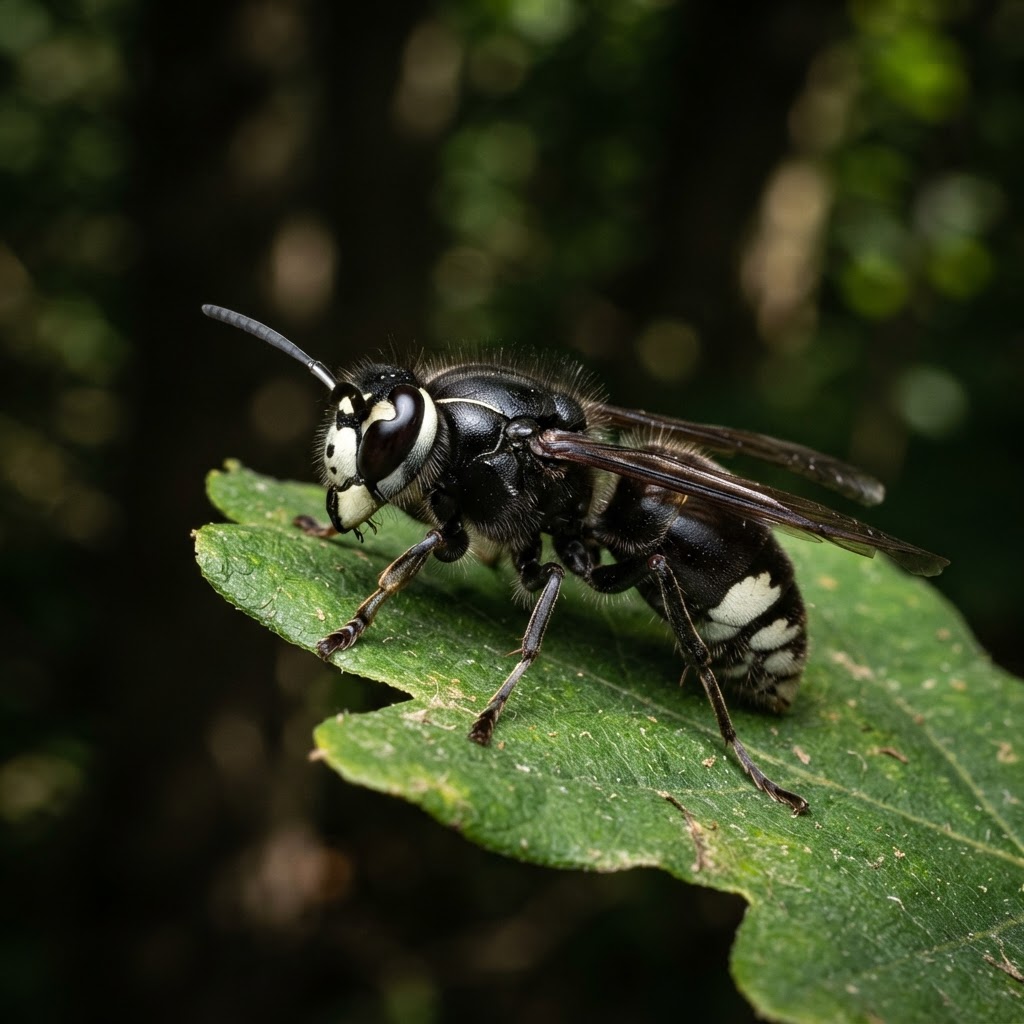
What They Do for Wisconsin
Bald-faced hornets are beneficial predators. A single colony removes huge numbers of flies, caterpillars, and other yellow jackets from the surrounding area — they are one of nature's most effective fly controllers. Left alone in a tree away from people, a nest is an asset to the yard. The danger is that they are extremely territorial: if you walk within several feet of the nest, or vibrate or bump the tree it hangs in, guards will pour out and sting repeatedly, sometimes pursuing for yards.
What They Do in the Winter
Like other yellow jackets, bald-faced hornet colonies are annual. The whole colony dies at first hard frost — only fertilized queens survive the winter in protected hiding spots, and the large papery nest is abandoned and never reused.
- Only mated queens overwinter — under bark, in logs, or in building crevices.
- Workers, males, and the old queen all die by late fall.
- The big gray nest you see in winter is empty and will not be used again.
- Each spring a lone queen chews wood fibers to start a brand-new nest from scratch.
Nesting
Bald-faced hornets build large, enclosed, gray, football-shaped paper nests by chewing wood fibers into pulp. Nests hang from tree branches, shrubs, or the eaves and siding of buildings, often 6–60 feet up. A mature nest can be the size of a basketball or larger and house several hundred workers.
Diet
Bald-faced hornets are hunters. Workers kill live insects — including flies, caterpillars, and other yellow jackets — and carry the chewed-up prey back to feed the larvae. Adults also drink nectar and tree sap for energy.
- Flies (a favorite — one colony removes thousands)
- Caterpillars and other soft insects
- Other yellow jackets and wasps
- Nectar, tree sap, and overripe fruit
Fast Facts
Despite the name, bald-faced hornets are actually a species of aerial yellow jacket (Dolichovespula), not a true hornet.
They can squirt venom toward the face of an intruder, which can irritate and temporarily blind — one reason to keep your distance.
Their black-and-white markings make them easy to mistake for a large, unusually aggressive "white-faced wasp."
Even the vibration from bumping or trimming the tree a nest hangs in can trigger a defensive swarm.
Guards may pursue an intruder for yards and sting repeatedly — they do not give up easily.
A gray nest left hanging in winter is empty and safe to remove — but check first that it is truly abandoned.
When to Call Mid State
Bald-faced Hornets nests near your home, deck, or play areas are a real safety risk — they can sting repeatedly and swarm when disturbed. Don't treat a large nest yourself. Our team removes them safely and treats the area to prevent rebuilding.