European Hornets
in Wisconsin
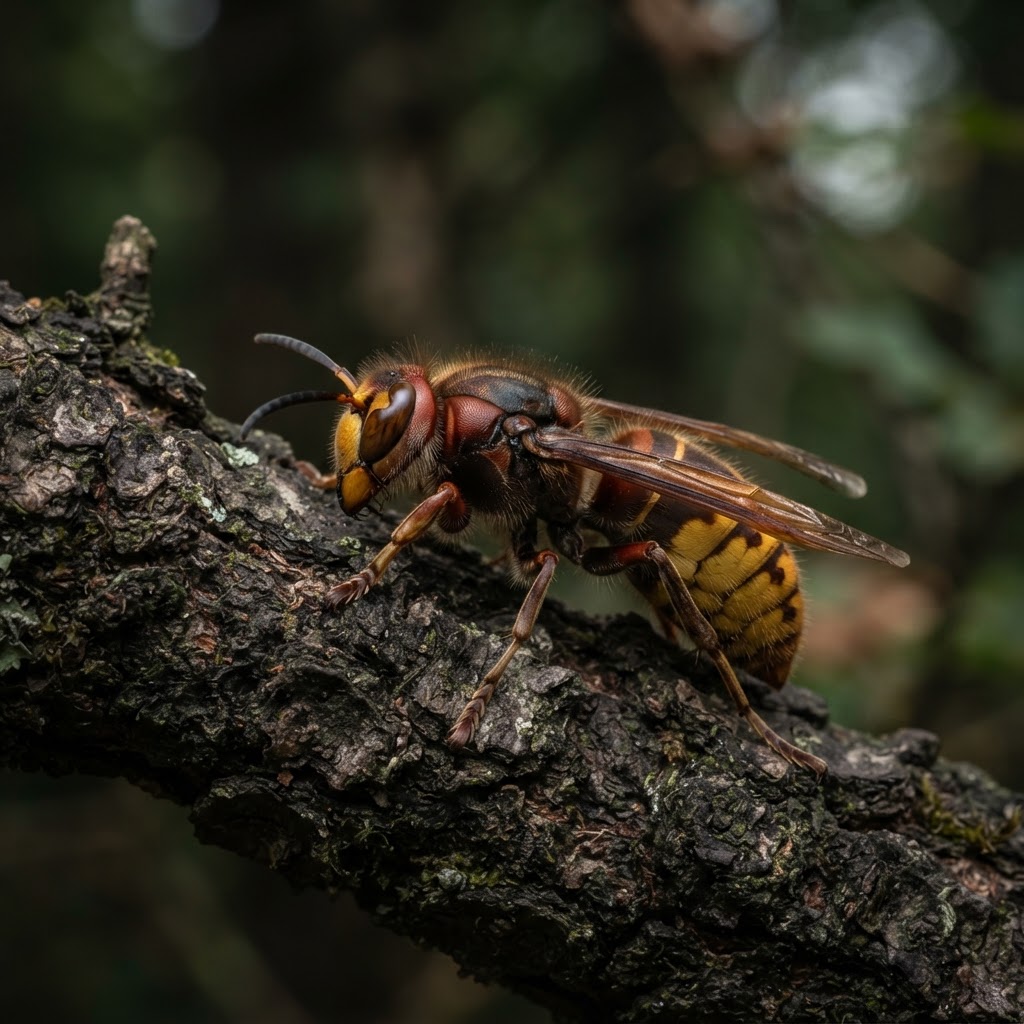
Wisconsin's largest true hornet — bigger than a yellow jacket, with a brown-and-yellow body. European hornets nest in tree cavities and wall voids and are unusual among stinging insects in that they stay active after dark, often banging into porch lights and windows on summer evenings.
What They Do for Wisconsin
European hornets are beneficial predators. Workers hunt large insects — grasshoppers, other wasps, flies, and caterpillars — and help keep yard pest populations in check. They are less aggressive than bald-faced hornets but will defend their nest vigorously, and their large size means a sting is more painful. Their night-time activity is what surprises most homeowners: they are drawn to lights and may hit windows and porch lamps after dusk.
What They Do in the Winter
Like other social wasps, European hornet colonies are annual. The entire colony dies in fall — only fertilized queens survive the winter in protected cavities such as hollow trees, wall voids, or outbuildings. The old nest is abandoned and never reused.
- Only mated queens overwinter — in tree cavities, wall voids, or outbuildings.
- Workers, males, and the old queen die by late fall.
- Each spring a lone queen starts a brand-new nest in a new cavity.
- Old nests are abandoned and are not reused the following year.
Nesting
European hornets build large, brown, paper nests in dark, protected cavities — hollow trees, barns, sheds, and wall voids. You rarely see the nest itself; you see the workers coming and going from a gap or hole. A mature colony holds 200–500 workers.
Diet
European hornets are hunters. Workers take large insects — grasshoppers, other wasps, flies, and caterpillars — and chew them up for the larvae. Adults also feed on tree sap and overripe fruit, and are drawn to outdoor lights at night.
- Large insects and grasshoppers
- Other wasps and flies
- Caterpillars and beetles
- Tree sap, overripe fruit, and (at night) lights
Fast Facts
European hornets (Vespa crabro) are a true hornet species — unlike bald-faced "hornets," which are really aerial yellow jackets.
They are one of the few stinging insects active after dark, often attracted to porch lights and windows in summer.
At over an inch long, they are the largest true hornet found in Wisconsin — larger than bald-faced hornets.
Their large stinger can sometimes penetrate standard clothing, so swatting one off your arm is a bad idea.
Away from the nest they are less aggressive than bald-faced hornets, but they will defend a nest hard.
You usually see workers, not the nest — they favor dark cavities like hollow trees and wall voids.
When to Call Mid State
European Hornets nests near your home, deck, or play areas are a real safety risk — they can sting repeatedly and swarm when disturbed. Don't treat a large nest yourself. Our team removes them safely and treats the area to prevent rebuilding.