Targeted Baiting
Slow-acting gel and station baits placed on foraging trails so workers carry the active ingredient back to the colony and the queen — eliminating the nest at the source.
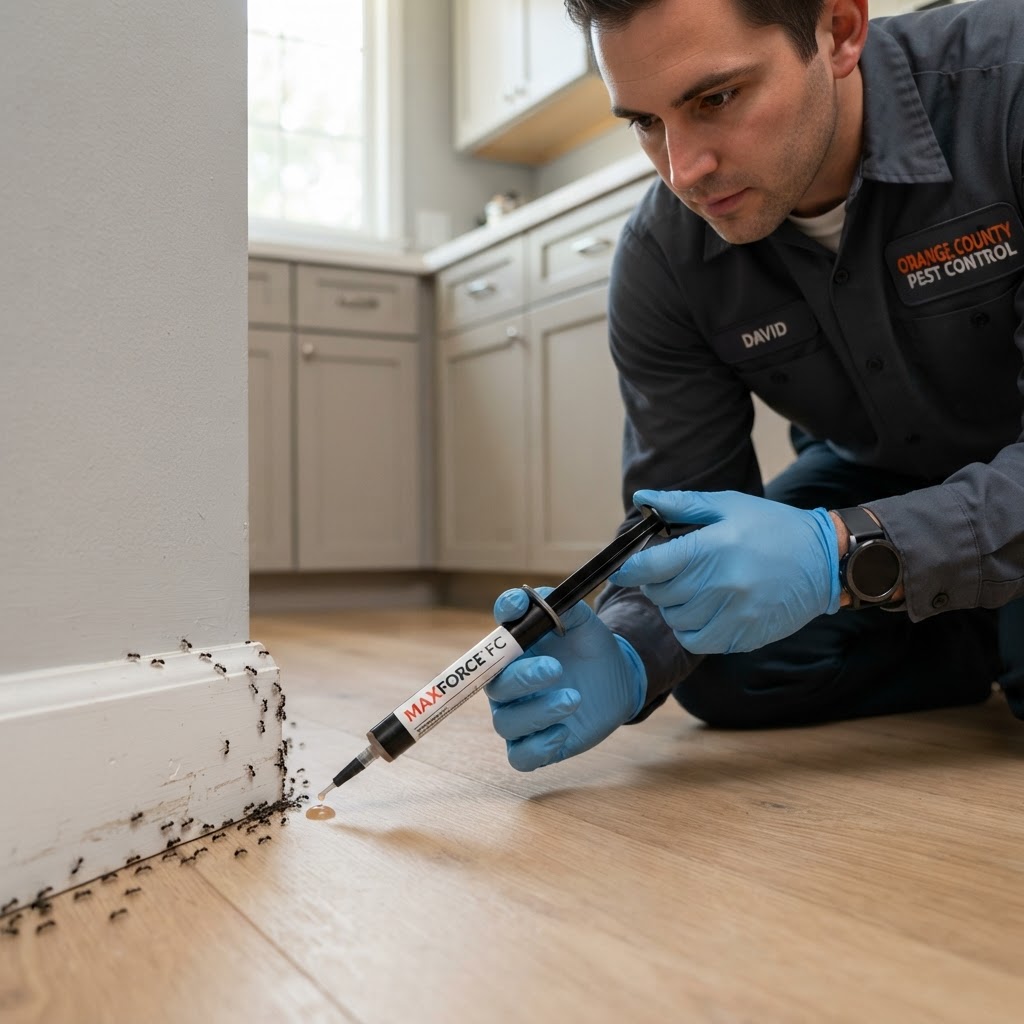
Exactly How It Works
Baiting is the only way to actually eliminate a colony, because it kills the nest — not just the bugs you see. A slow-acting bait is placed directly on a foraging trail. Worker ants or roaches feed on it and carry it back to the colony, where it is shared with the queen and the rest of the nest through trophallaxis (mouth-to-mouth feeding).
The bait is deliberately slow. If it killed too fast, the forager would die before reaching the colony. A slow active ingredient lets the worker return home and spread the dose through the nest, so the queen and the brood die too. Once the queen is gone, the colony collapses.
This is why spraying an ant trail is the wrong move: a contact spray kills the foragers you see, the colony perceives a threat, and it "buds" — splitting into multiple colonies that spread the infestation. Baiting does the opposite: it uses the foragers to deliver the treatment straight to the source.
Step-by-Step
- 01
Identify the pest species and the foraging trails — different ants prefer different baits (sugar, protein, or grease).
- 02
Place gel bait or tamper-resistant bait stations directly on or beside the active trail where workers will find it fast.
- 03
Workers feed on the bait and carry it back to the colony, sharing it with the queen and brood.
- 04
Let the bait work — do NOT spray the trail. A contact spray kills foragers and can cause the colony to bud and spread.
- 05
Follow up to confirm the colony is eliminated, then seal entry points so a new colony cannot move in.
Products & Materials
Gel bait
A slow-acting bait in a gel form, placed in tiny dots on foraging trails; workers feed and carry it to the colony.
Bait stations
Tamper-resistant stations for kitchens, bathrooms, and around the home where kids and pets are present.
Species-matched formula
Sugar, protein, or grease baits chosen based on what the specific ant or roach species is foraging for.
Ants (odorous house, carpenter, pavement, pharaoh), cockroaches (German, American), and rodents.
Any colony pest — ants, roaches, rodents. The only way to eliminate a colony is at the source, not just the foragers you see.
Before, During & After
We identify the species and find the foraging trails — this matters, because the wrong bait for the wrong ant will be ignored. We choose the formula matched to what they are feeding on.
Bait is placed in small amounts on or near the trails and in stations. You may actually see MORE ants for a day as they feed — that is the bait working, not a failure.
Over several days to a week, the colony collapses as the bait spreads to the queen. We follow up to confirm elimination and seal entry points so a new colony cannot move in.
Baits are placed in tiny amounts in stations or cracks, not broadcast-sprayed. Tamper-resistant stations are used around kids and pets. Far less total product than a spray, placed only where the pests will find it.
Targeted Baiting — FAQ
That is a good sign. It means the workers found the bait and are recruiting nestmates to feed on it. More ants on the bait means more bait going back to the colony. Resist the urge to spray — let them carry it home.
Explore the Service
Want this for your home? See our Ant Control service page for what is included and how to schedule.
Ant ControlGet a Free
Quote Today
Contact Info
"We take pests personally. When you call Mid State, you're getting direct service from someone who takes pride in protecting your home and business."