Bite Identification Guide

What Do Bug Bites
Look Like?

Clinical illustrations of the most common pest bites in Wisconsin — wasp stings, mosquito, bed bug, spider, tick, and flea. Compare the appearance, pattern, and timeline to identify your bite and know when to seek medical care.

Important: This guide is for identification only and is not a substitute for professional medical advice. If you have difficulty breathing, facial swelling, or signs of anaphylaxis, call 911 immediately.

Compare Bite Types

Common Wisconsin Bug Bites

Each card shows a clinical illustration of the bite, key symptoms, the bite pattern, and when to seek medical attention.
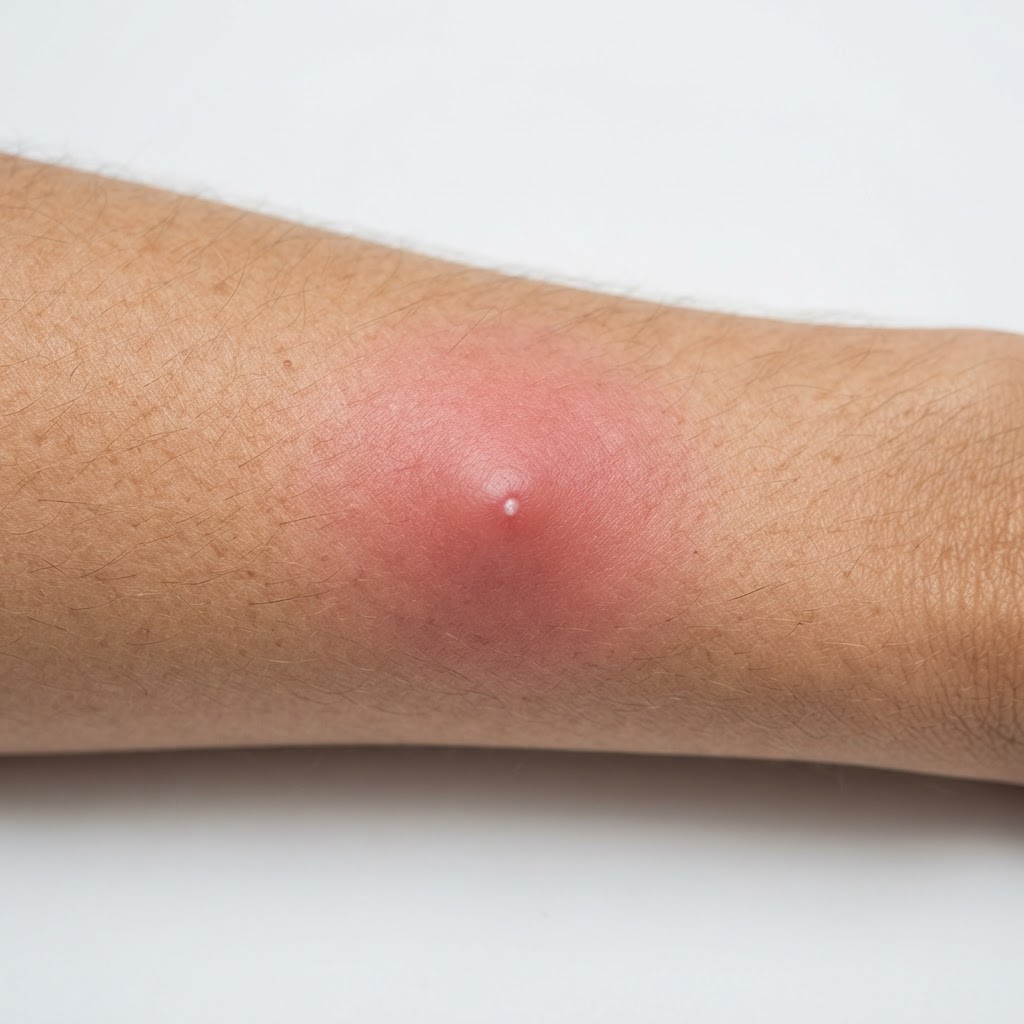
Wasp & Yellow Jacket Sting — clinical identification illustration
Stinging Insects

Wasp & Yellow Jacket Sting

A raised, red, swollen welt — usually 1–3 inches across — with a tiny white puncture point at the center where the stinger entered. Unlike bees, wasps can sting multiple times.

Sensation: Immediate sharp, burning pain at the sting site. Pain peaks within minutes and fades to an itch over hours.
Pattern: Single sting site. Multiple stings if you disturbed a nest — welts may appear in a cluster.
Timeline: Pain and swelling peak within 1–2 hours. Swelling and redness can persist 2–5 days. Itching may last a week.
When to Seek Care

Seek emergency care for difficulty breathing, swelling of the face/throat, dizziness, or hives away from the sting site — these signal anaphylaxis. Also seek care if swelling is massive or the sting is inside the mouth/throat.
Wasp & Hornet Nest Removal
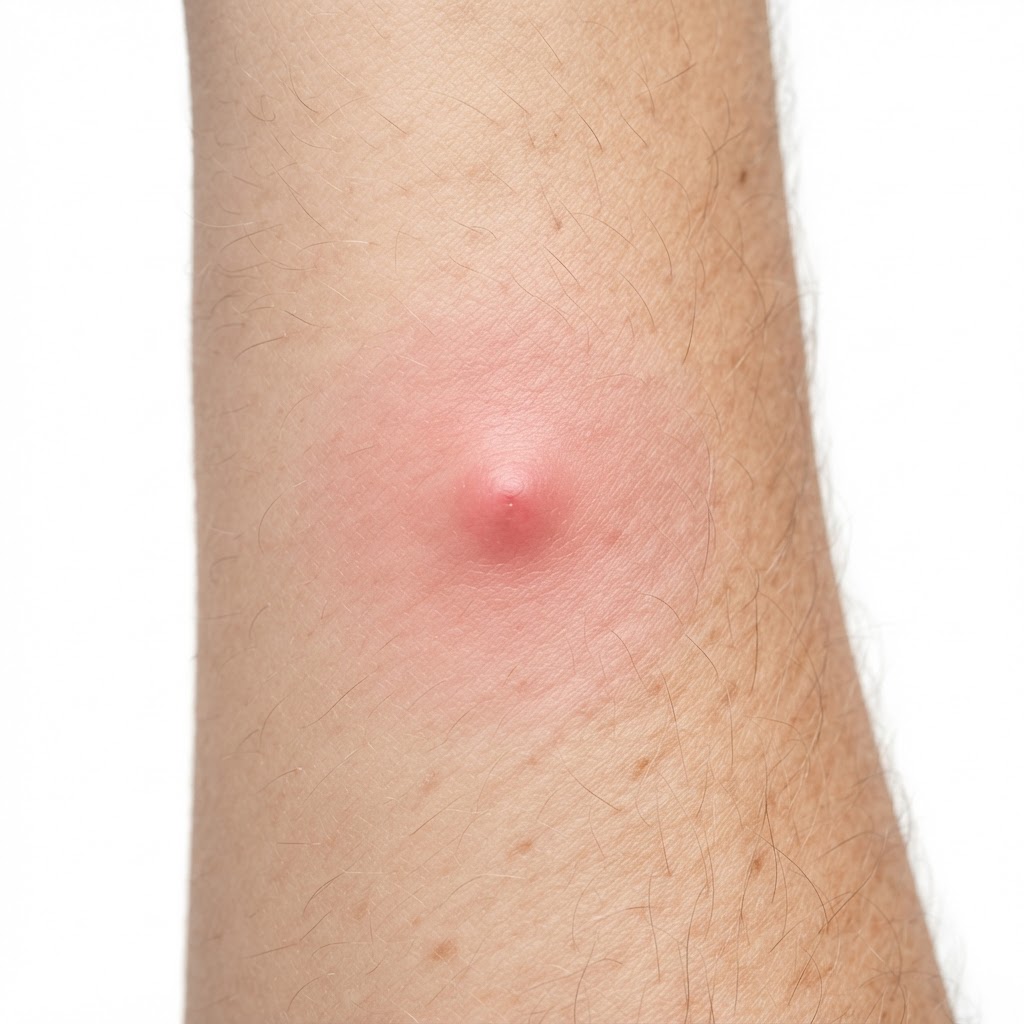
Mosquito Bite — clinical identification illustration
Flying Insects

Mosquito Bite

A small pink-to-red raised dome-shaped bump, usually under 1/2 inch. A lighter pink halo may surround the bump. Appears within minutes of the bite.

Sensation: Intense itching that builds over minutes. Usually no pain — you may not feel the bite itself.
Pattern: Scattered individual bumps, often on exposed skin (arms, legs, neck). Multiple bites if several mosquitoes were present.
Timeline: Bump appears in 10–30 minutes. Itching peaks within 1–2 days. Bump fades in 3–7 days.
When to Seek Care

Seek care for fever, body aches, or rash within 3–14 days (possible West Nile virus). A large area of swelling and redness (skeeter syndrome) may need antihistamines. Severe allergic reaction is rare but possible.
Mosquito & Tick Control
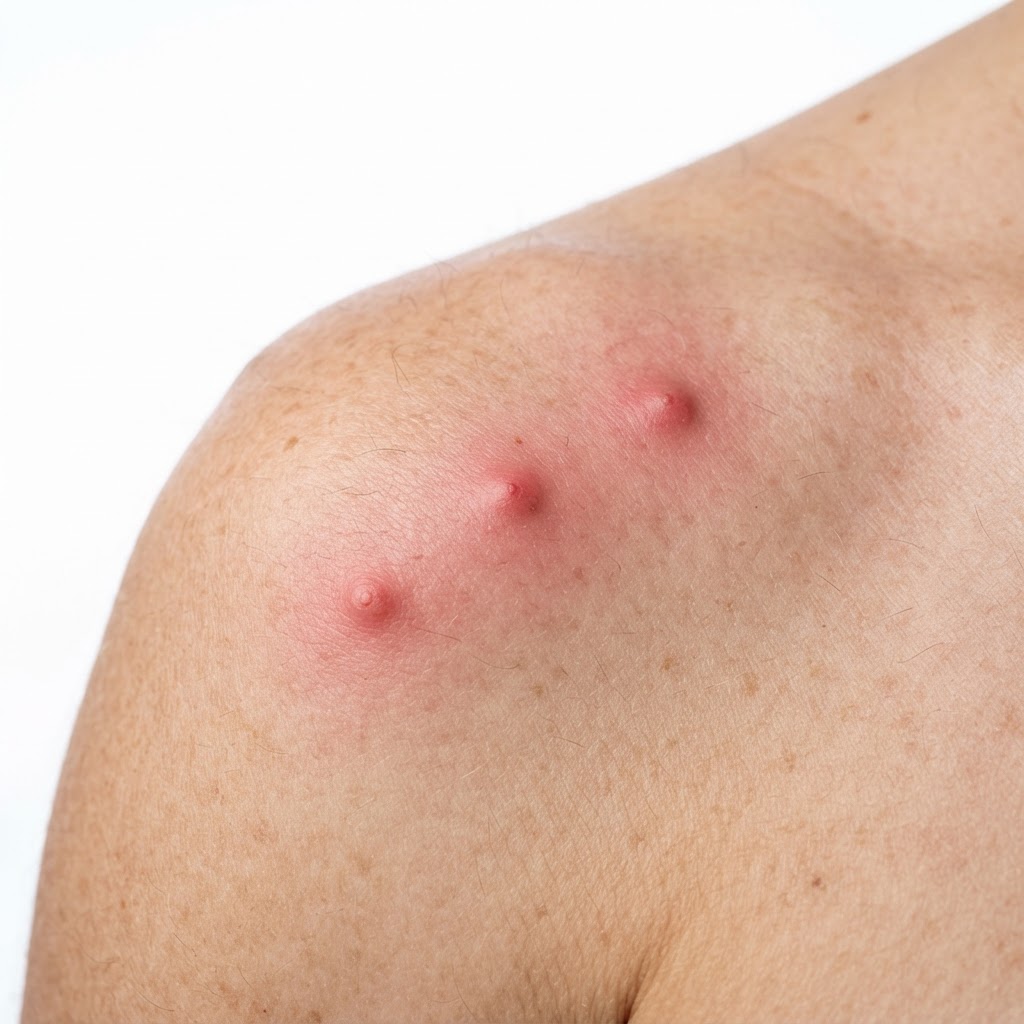
Bed Bug Bites — clinical identification illustration
Blood-Feeding Insects

Bed Bug Bites

Small flat or slightly raised red bumps, often with a darker red center. Bites are typically 2–4 mm across with a red halo.

Sensation: Itching that may not appear for 1–3 days after the bite (delayed reaction). Some people have no reaction at all.
Pattern: The hallmark sign: bites in a line or cluster — often 3 in a row ("breakfast, lunch, and dinner"). Commonly on shoulders, arms, neck, and back — areas exposed during sleep.
Timeline: Bumps appear 1–3 days after biting. Itching lasts 1–2 weeks. Without re-biting, marks fade over 2 weeks.
When to Seek Care

Bed bug bites themselves are not dangerous, but heavy scratching can cause skin infection. The real concern is the infestation — if you see bite patterns, inspect for live bugs, shed skins, and dark fecal spots on mattress seams.
Bed Bug Treatment
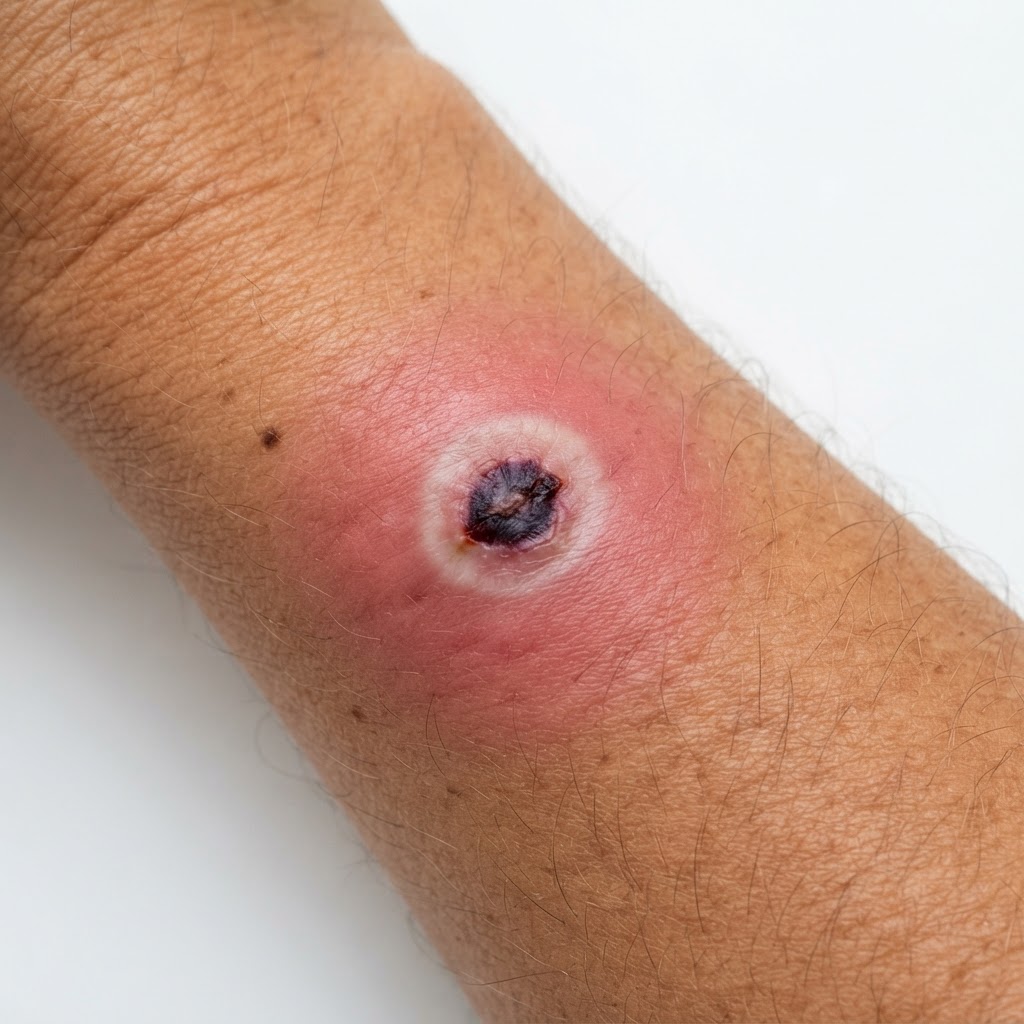
Spider Bite (Brown Recluse) — clinical identification illustration
Spiders

Spider Bite (Brown Recluse)

Initially a small red bump. Over 2–8 hours it may develop into a red area with a pale or bluish center and a darker ring — the classic "red, white, and blue" sign. A blister may form at the center.

Sensation: Mild stinging at first, often unnoticed. After a few hours, the area may become painful, tender, and warm.
Pattern: Usually a single bite. Most Wisconsin spiders are harmless — the brown recluse is not native but can arrive in shipped goods. Most "spider bites" are actually staph infections or other insect bites.
Timeline: Redness and pain worsen over 8–24 hours. In true recluse bites, the center may turn dark and necrotic over 3–7 days, forming an ulcer that can take weeks to heal.
When to Seek Care

Seek medical care if the bite area grows larger than a quarter, turns dark/black, forms an open sore, or you develop fever, chills, or nausea. Any spreading redness with a dark center needs prompt evaluation.
Spider Control
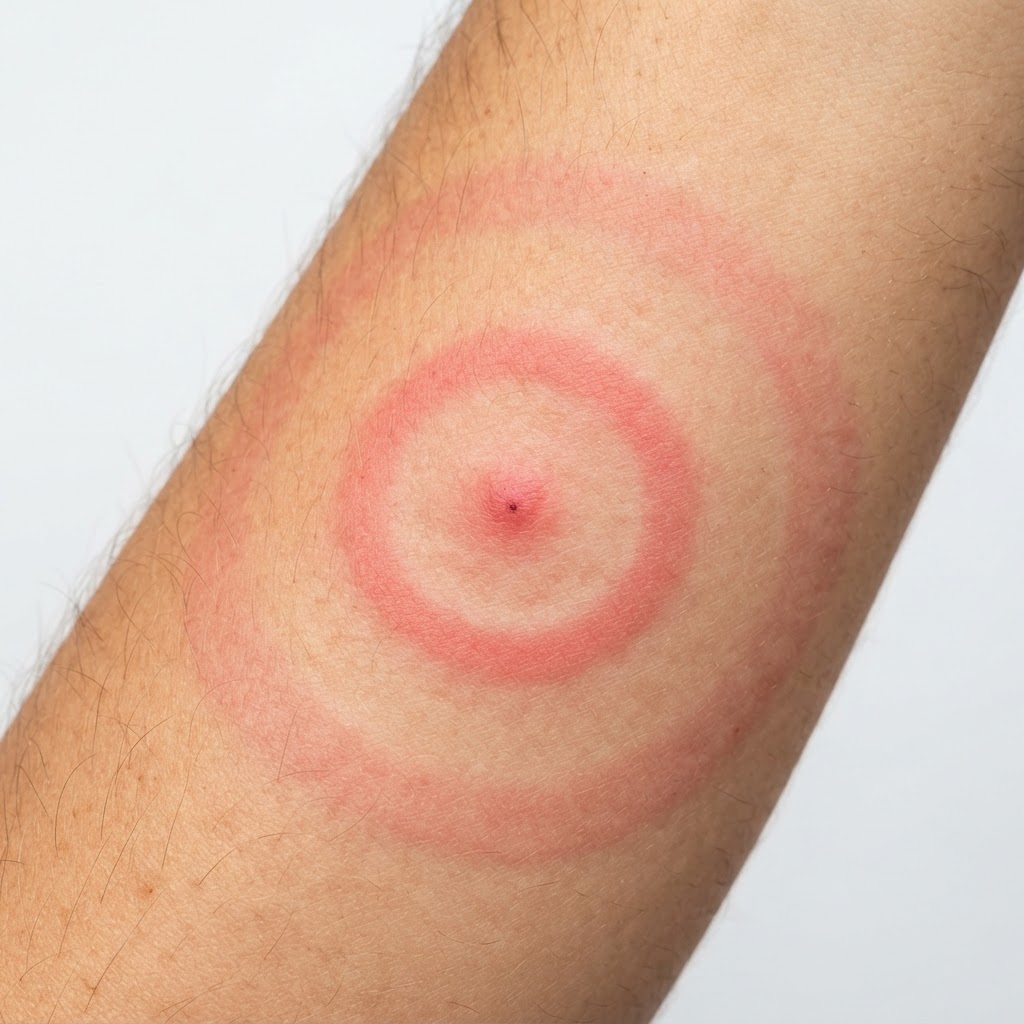
Tick Bite & Lyme Rash — clinical identification illustration
Ticks

Tick Bite & Lyme Rash

Initially a small red bump at the attachment site — similar to a mosquito bite. The key sign of Lyme disease is a "bullseye" rash (erythema migrans): a red ring that expands outward with a clearing in the middle and a red center.

Sensation: Usually painless — most people do not feel the tick bite. The rash is usually not itchy or painful.
Pattern: A single bump at the attachment site. The bullseye rash expands over days and can reach 12+ inches across. The tick may still be attached (look for a small dark speck).
Timeline: The bump appears within 24 hours. The bullseye rash typically appears 3–30 days after the bite (average 7–14 days). Without treatment, Lyme can cause joint pain, neurological symptoms, and heart issues weeks to months later.
When to Seek Care

Seek medical care immediately if you see a bullseye rash, develop fever, headache, fatigue, or muscle/joint aches after a tick bite. Lyme disease requires antibiotics — early treatment is highly effective. Save any removed tick for identification.

Mosquito & Tick Control
Flea Bites — clinical identification illustration
Blood-Feeding Insects

Flea Bites

Tiny red raised bumps, each with a small red halo and sometimes a darker red center puncture. Smaller than mosquito bites — about the size of a pinhead.

Sensation: Intense itching that begins immediately. Flea bites are notoriously itchy because fleas inject saliva that causes a strong allergic reaction.
Pattern: Often in clusters of 3–4 bites in a line or group. Strongly favors the lower legs, ankles, and feet — fleas jump from carpets and pet bedding. Pet owners may notice bites while their pets scratch.
Timeline: Itching begins immediately and can last 1–2 weeks. Bumps fade over 1–2 weeks but may leave dark marks that persist for months.
When to Seek Care

Seek care for signs of infection (spreading redness, pus, warmth) from scratching. Rarely, fleas can transmit diseases. If you have no pets but are getting bitten, you may have a wildlife flea infestation (raccoons, opossums under the home).

Wildlife Control
Common Questions

Bite FAQ

Stop the Bites at the Source

Get Rid of What's Biting You

Identified your bite? Let us eliminate the pest behind it. Licensed, insured, and local to Northeast Wisconsin — same-week appointments.

Call NowFree Quote