American Kestrel
in Wisconsin
The American kestrel is Wisconsin's smallest and most colorful falcon — and a powerhouse pest controller. A single kestrel family can eat hundreds of grasshoppers, mice, and voles in a season, protecting pastures, meadows, and crops. Kestrel numbers are declining, so installing nest boxes is one of the most effective things a landowner can do for natural pest control.
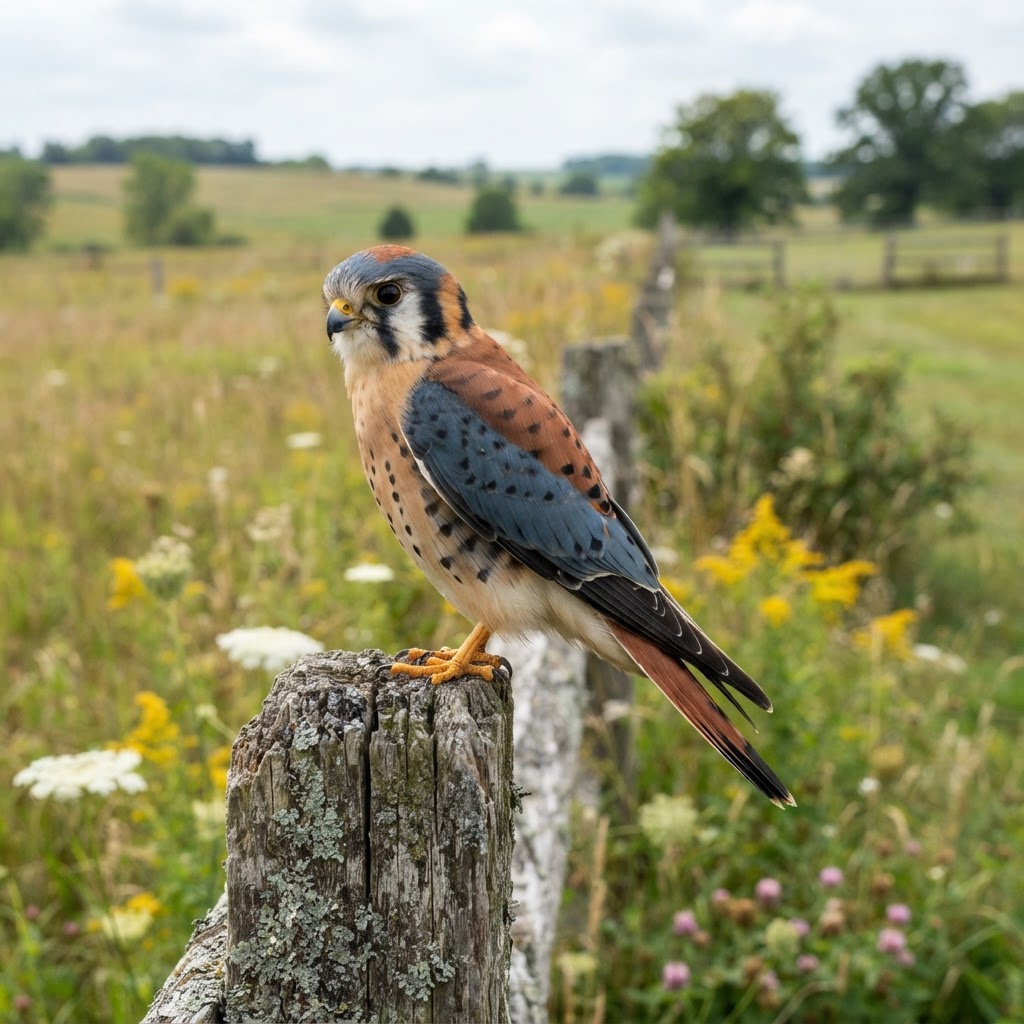
American kestrels — Wisconsin's smallest falcon — hunt the open fields and grasslands of Shawano, Outagamie, and Waupaca counties, where they take grasshoppers, mice, and voles from the pastures and hayfields around New London and Clintonville. Their decline makes kestrel nest boxes a high-impact conservation project for any Northeast Wisconsin farm or large property.
Now is the time to install kestrel nest boxes — pairs begin scouting territories in late winter ahead of the spring breeding season.
In Northeast Wisconsin
Open fields and fencelines across the Waupaca and Shawano county countryside, the grasslands at Navarino Wildlife Area, and the farm fields around New London and Clintonville — look for a small falcon hovering on the wind.
Kestrels devour grasshoppers and crickets that damage pastures, hayfields, and gardens.
A kestrel family takes hundreds of mice and voles a season, protecting crops and stored feed.
Kestrel populations are dropping across North America; nest boxes directly support them.
Like all raptors, kestrels are protected by state and federal law — never harm them or their nests.
Why American Kestrel Matter
The American kestrel is a small, open-country falcon that hunts by hovering over fields before dropping on grasshoppers, mice, voles, and large insects. It is one of Wisconsin's most efficient natural controllers of crop and pasture pests. Because kestrels nest in cavities — old woodpecker holes and natural tree hollows — they readily take to human-made nest boxes, making them one of the easiest beneficial predators to attract and support.
Common American Kestrel in Wisconsin
Here are the common American Kestrel found across Wisconsin, with the specific benefits each species provides to nature and to people.
American Kestrel
Benefits to NatureWisconsin's smallest falcon, colorful with slate-blue wings (male) and russet back; hovers over fields to hunt insects and mice.
Benefits to HumansControls grasshoppers, crickets, mice, and voles in pastures and meadows; declining, so nest boxes help.
Related Beneficial Species
These species do similar work in the Wisconsin landscape — explore how they fit together.
When They're Beneficial
- Hovering over pastures and meadows to hunt grasshoppers and crickets
- Catching mice and voles that damage crops and stored feed
- Indicating healthy, open, insect-rich habitat
- Nesting in tree cavities or nest boxes away from living spaces
When Kestrels Become a Nuisance
Kestrels are almost never a household pest. The rare conflict is a kestrel diving at people near its nest box — simple give-nest-space solves it. Because all raptors are protected by federal law, any conflict must be resolved with humane deterrence — never harm. The best action with kestrels is to support them with nest boxes.
Bird ControlLiving Alongside American Kestrel
Install a Nest Box
A kestrel box on a pole at the edge of a field gives a beneficial falcon a home and boosts grasshopper and rodent control.
Preserve Open Habitat
Keep hedgerows, meadows, and field edges — kestrels need open ground to hover and hunt.
Avoid Broad Insecticides
Kestrels depend on a rich insect and rodent prey base; reducing broadcast chemicals supports them.
Give Nests Space
If a kestrel dives near you in spring, it is defending its box — simply step back and give the family room.
When to Call Wildlife Specialists
Kestrels are protected by law and almost never a household pest. The rare conflict is a kestrel nesting in a problem spot or diving at people near its box — resolved with humane, legal deterrence, never harm.
- A kestrel is diving at people near its nest box and the conflict won't resolve with space
- A kestrel has nested in a genuinely dangerous location, such as over an entryway
- You find an injured or grounded kestrel — do not touch it; call a wildlife rehabilitator
- You want to attract kestrels but aren't sure where to place a nest box
Kestrels are allies, not pests. If one is nesting in a problem spot, we can help with humane, legal bird deterrence.
Bird ControlAmerican Kestrel Quiz
How well do you know Wisconsin's american kestrel? Take this quick quiz to find out.