Skunks
in Wisconsin
Skunks are among Wisconsin's most underrated beneficial mammals. A single skunk can devour thousands of grubs, insects, mice, and even yellowjacket nests in a season. They are never a household pest in the traditional sense — they only become a nuisance when they den under a porch or shed. Left outdoors, they are a free, natural lawn and pest controller.
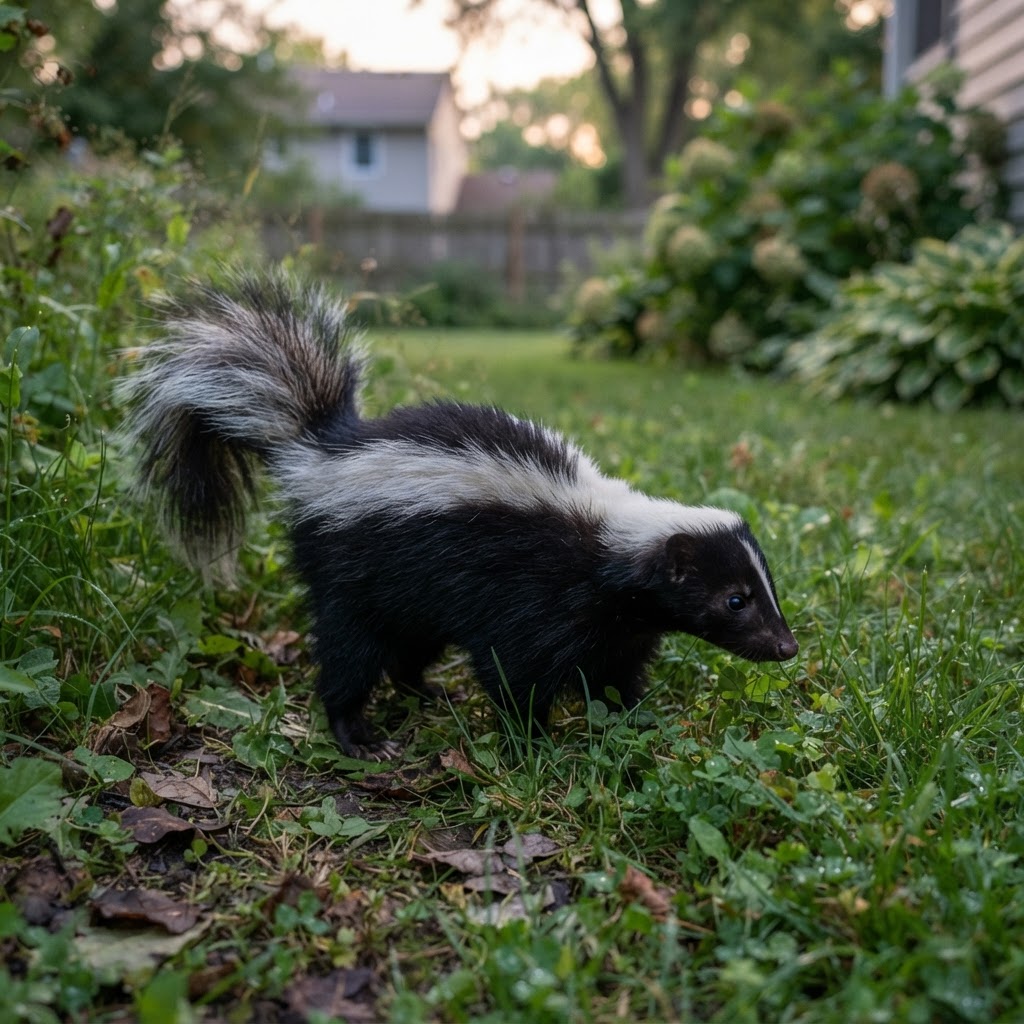
Striped skunks are a fixture of Northeast Wisconsin's rural and suburban edges, where the mix of farmland, grass, and old outbuildings across Waupaca, Outagamie, and Shawano counties gives them ideal grub-hunting and denning habitat. Mid State removes skunks that den under porches, decks, and sheds from New London to Shawano — but a skunk just passing through your yard is doing free grub and mouse control.
Skunk mating (Feb–Mar) and fall grub-hunting push skunks under porches and sheds. If you smell skunk near the foundation, a den may be forming.
In Northeast Wisconsin
Rural edges around New London and Clintonville, the farm fields bordering Navarino Wildlife Area, and Waupaca County grasslands after dusk are where striped skunks grub-hunt most actively.
Skunks dig for grubs, beetle larvae, and ground-nesting wasps — protecting lawns and gardens from insect damage.
Skunks catch and eat mice, voles, and even small rats, helping keep rodent populations down around outbuildings.
Skunks are one of the few animals that will dig up and consume an entire ground yellowjacket nest.
Despite the myth, skunks are not especially prone to rabies; most are healthy and simply want to be left alone.
Why Skunks Matter
Striped and spotted skunks are omnivorous nocturnal foragers that play a quiet but valuable role in Wisconsin's landscapes. They root out lawn grubs and beetle larvae, hunt mice and voles, raid ground-nesting wasp nests, and clean up carrion. Their famous spray is a defense — not an attack — and they give ample warning before using it. When they stay outdoors, skunks are a beneficial part of the local ecosystem.
Common Skunks in Wisconsin
Here are the common Skunks found across Wisconsin, with the specific benefits each species provides to nature and to people.
Striped Skunk
Benefits to NatureWisconsin's common skunk, black with two white stripes; forages for grubs, insects, mice, and ground-nesting wasps at night.
Benefits to HumansMajor natural controller of lawn grubs, beetle larvae, and yellowjackets; rarely seen but hard at work.
Spotted Skunk
Benefits to NatureA smaller, rarer skunk with broken white spots; does a handstand warning dance before spraying.
Benefits to HumansNow uncommon in Wisconsin, it still helps control insects and rodents; a prairie and edge-land species.
Related Beneficial Species
These species do similar work in the Wisconsin landscape — explore how they fit together.
When They're Beneficial
- Foraging for grubs and beetle larvae in lawns and gardens
- Hunting mice, voles, and other small rodents around outbuildings
- Digging up and consuming ground yellowjacket nests
- Cleaning up carrion and fallen fruit in the landscape
When Skunks Become a Nuisance
Skunks only become a problem when they den under a porch, deck, or shed, or when a pet corners one. The fix is exclusion — sealing the opening after the animal leaves with a one-way door — never poison or harm. If a skunk is simply passing through your yard at night, it is doing you a favor and should be left alone.
Wildlife ControlLiving Alongside Skunks
Seal Den Sites
After the skunk leaves at night, seal porch, deck, and shed openings with hardware cloth to prevent re-entry.
Use One-Way Doors
A one-way exclusion door lets a denning skunk leave but not return — humane and effective.
Remove Food Sources
Secure garbage, pet food, and fallen fruit so skunks are not drawn to den near an easy meal.
Give Them Space
A foraging skunk is helping you. Watch from a distance — they spray only when cornered or startled.
When to Call Wildlife Specialists
A foraging skunk is helping you, but one that dens under a porch or acts strangely calls for a professional. Humane exclusion — never poison — is the right approach.
- A skunk has denned under your porch, deck, or shed
- A skunk is acting strangely — out in daylight, unafraid, stumbling, or aggressive (keep away; possible rabies)
- A pet has been sprayed, especially in the eyes, or had a close encounter
- You're uncomfortable performing one-way exclusion yourself
A skunk under your porch? We remove it humanely with one-way exclusion — never poison. Call Mid State for wildlife control that respects nature.
Wildlife ControlSkunks — Our Work
When these animals become a real problem, here's how Mid State has handled it for Northeast Wisconsin homeowners.
Raccoon Removal — New London Chimney & Attic
A raccoon in a New London chimney and attic was removed humanely, the chimney capped, and the roofline sealed to prevent re-entry.
Squirrel Removal — Waupaca Attic & Exclusion
Squirrels chewing into a Waupaca attic were removed with one-way doors and the damaged vents and entry holes sealed to keep them out.
Bat Exclusion — Waupaca Attic
A bat colony in a Waupaca attic was excluded humanely and legally with one-way doors, and every entry point sealed so they could not return.
Skunks Quiz
How well do you know Wisconsin's skunks? Take this quick quiz to find out.